Tag Archives: Back to School

Best Kindergarten Read Alouds for Back to School – FREE videos

Kindergarten Read Alouds

I’ve sharpened the pencils, gotten out the Play Doh and set up the blocks. Now it’s time to pull out some great books for the first month. The problem here is always the same – how to choose from so many amazing picture books! Kindergarten read aloud is a key time for engaging students with school and literacy, and it has to be good! So, I have furrowed my brow and winnowed down the list to 9 perfect kindergarten read alouds for the first month of school. Each of these titles is a proven winner in my classroom, and they will be in yours too!

As an Amazon Associate, if you click on a link and make a purchase, I may make a small amount, at no extra charge to you. Win win!

Read on to learn more about these Delightful Kindergarten Read Alouds!

Pete the Cat, Rocking in My School Shoes – a perfect Kindergarten Read Aloud for Day 1

by Eric Litwin, illustrations by James Dean

Pete the Cat is a perfect way to start your school year – in fact, I read it in my Kindergarten classroom on Day 1, and again on Day 3, and again, and again….. If you teach 5 year olds, you know what I mean! This book becomes a touchstone text in my classroom, and there are Pete the Cat books to match many of my themes, so we enjoy them all year long! For example:

Pete the Cat, Rocking in My School Shoes is a perfect read aloud for the first day, The simple text, delightful illustrations, and the school setting will enchant your kinders. Because the book is set in a school, it is a great way to introduce key locations like the lunchroom, library and playground.

This Pete the Cat Reading Unit on TPT includes a scavenger hunt around your school based on the book, and lots of fun activities to build early reading skills. Grab it today and really bring the book to life.

Don’t have the book? No worries! This video is a full reading of the text!

Alma and How She Got Her Name – a Kindergarten Read Aloud for Making Friends

by Juana Martinez-Neal

This Caldecott Honor book is perfect for Day 2 of kindergarten! Alma’s name is long, really loooooong! And she is not a fan. That is, not until her dad shares the story of her name with her, and she realizes that her name is a connection to her ancestors and that their gifts are also hers!

After I read the book, I briefly introduce the concept of turn and talk. Then I model with a student by sharing the story of my name. (My story is not even remotely interesting, my mom just liked the named Susan. But that’s OK. I want students to talk, even if they don’t have an amazing story like Alma.) Then, I assign students a partner and they tell each other their stories. I love to listen in. You can learn a lot about a student by hearing the story of their name. And students will connect and begin to form friendships as they share their stories.

Wonderfully, this book is also available in Spanish. Because I’m bilingual, I read the book in both languages. Even students who don’t understand Spanish can listen to this text. It’s lyrical, and not very long, and I love exposing them to that beautiful language that I love. You can grab Alma and How She Got Her Name here, or Alma y como obtuvo su nombre here – or get them both!

Want your students to hear this beautiful book in Spanish? Just play this video!

David Goes to School – a Kindergarten Read Aloud About Forgiving

by David Shannon

This classic text is perfect for ending the first week of school. I have read this story to hundreds of students across the years, and they always laugh out loud at David’s antics and shenanigans! And of course, MY students would never be so naughty, or so they tell me!

David Goes to School features one of the naughtiest boys ever to grace the hallways. You have probably taught a David. He yells, pushes, starts a food fight, scribbles on the desk…. You name it, he does it! You will groan and your students will giggle as he romps his way through the day. But it’s the last page that puts this book on the shelf as a kindergarten read aloud classic. David stays after school to make amends, and at the end, the teacher tells him that she loves him. You have to read the book, this description doesn’t do it justice. But the message behind David Goes to School is one that every student needs to hear, especially the Davids in your class.

How Do Dinosaurs Go to School? – Introducing the Rules of Kindergarten with a Read Aloud

by Jane Yolen, illustrations by Mark Teague

Have you ever wondered How Dinosaurs Go to School? This is such a terrific book for Kindergarten Read Aloud! It rhymes as it introduces students to all the things NOT to do! Everytime I read this book, the students roll with laughter at the naughty antics of the dinosaurs, which is a perfect way to introduce what they SHOULD do in a way that is fun, engaging, and doesn’t make any child feel like a bad kid.

I like to use this book to lauch week 2 of kindergarten. I spend the first week getting to know students and showing them that school is a place where we focus on learning and growing and being together. I purposefully don’t talk about the rules on the first day. (For more about that philosophy, check out this blog post, Winning Week 1.) But by the start of the second week, we are ready to chat about how we are going to be learners together, and this is the perfect kindergarten read a loud to get the conversation started. And, if your students love a good series, How Do Dinosaurs Go To School is just one of many, many books in the series!

Pirates Go To School – a Swashbuckling Read Aloud for Kindergarten

by Corinne Demas, illustrations by John Manders

The second week of school I am really focused on helping kids explicitly learn the rules, and this is another great read aloud to help kindergarten students understand how to behave. In this book, surprisingly, the pirates are perfect models of how to behave in school. They hang up their swords neatly, they clean up after their parrots, and they only try to mutiny once!

Pirates Go To School is a fun, rhyming text that helps reinforce the rules of school. I like to read it the day after I read How Do Dinosaurs Go To School, and then I ask the kids to talk about how the texts are different. They notice superficial things, like dinosaurs are different from pirates. But they also notice that the pirates are good and the dinosaurs are bad, and that is a great way to keep our discussion about the rules of school going. Trust me, Pirates Go To School is one kindergarten read aloud you will be glad you tried!

The Twelve Days of Kindergarten; a Counting Book – Math and School in one great Read Aloud!

by Deborah Lee Rose, illustrations by Carey Armstrong-Ellis

“On the first day of Kindergarten, my teacher gave to me…. the whole alphabet from A to Z!”

Isn’t that a charming way to begin a cumulative counting book? The whole book continues with an easy rhythm and delightful illustrations, making this a perfect kindergarten read aloud!

I like to use this book in the second week of school. By that time, my students have encountered many of the situations in the illustrations. We’ve done puzzles and blocks and beads, and they recognize the activities, which helps them feel connected to the book. When I read this, we spend a lot of time looking at the whimsical but realistic illustrations. There is a lot there that will make them smile, and even laugh (like the boy who picks his nose on EVERY page!) Not only do we spend time enjoying the illustrations, I get in a little math because we do a lot of counting! The Twelve Days of Kindergarten is definitely a great way to start the year!

The World Needs More Purple Schools – a Kindergarten Read Aloud about Being You!

by Kristen Bell and Benjamin Hart, illustrations by Daniel Wiseman

You know how we mix red and blue to make purple? The premise behind this book is that mixing all different kinds of people together makes for the strongest school, and I think that is a perfect message to start sending in kindergarten!

I like to read The World Needs More Purple Schools towards the end of the second week of school because it sends such a positive message about curiosity, cooperation and encouraging each other. This book is an important kindergarten read aloud because it lets kids know that we are in this together, and that being yourself is a wonderful gift to give your classmates. The text can be a little long, so if my kindergarteners are getting restless, I just read the main text and skip the dialogue in the speech bubbles. It makes perfect sense that way, and later in the year, when they are able to sit for a bit longer, we return to this book and add those bits back in.

The Queen of Kindergarten/The King of Kindergarten – Royal Read Alouds for Back-to-School

by Derrick Barnes, illustrations by Vanessa Brantley-Newton

Both of these charming books bring out different skills that kindergarten students are eager to master – kindness, growing up, and making friends – which makes them wonderful additions to your kindergarten read aloud. Even though the same author/illustrator team created both of these books, they have really different rhythm and features, so I recommend grabbing both.

I read these books towards the end of the second week of school, or even the beginning of the third week. They are the longest books on this list, and attention spans need to develop so that kids can listen for 10 minutes or so. I like to read The King of Kindergarten the first day, and the Queen of Kindergarten the second day. After we finish the second book, I ask kids which one they preferred. I even use the word Opinion to get them ready for our Opinion Writing unit which comes later in the year!

So, now you have 9 really great picture books to spread out across the first few weeks of school. As I said in the beginning of the blog post, it was really hard to narrow the list down to something manageable. You probably noticed that I didn’t include any ABC books, and you might be asking yourself if I made a mistake. Nope! Truth is, I just couldn’t narrow the list down if I included ABC books, so I am planning a future blog post just about my favorite ABC books. Check back!

In the meantime, be sure to check out other recent blog posts, and let’s connect!

Let’s Connect!

You can find Ms. Cotton’s Corner in various corners of the Internet – TPT, Instagram, Facebook, Pinterest and YouTube. See you there!

Check these places to ensure that you don’t miss a thing! And don’t forget to tell your friends! Sharing is Caring!

Happy teaching!

Susan

Five Fiction Picture Books to Start the School Year Right! – 30 Days, 10 Minutes to a More Literate Classroom

Why use picture books in the intermediate classroom? Won’t the kids think they are babyish? Well, that might have been true once (although I could make the case that it was NEVER true), but in recent years, authors have been putting out some amazing picture books aimed at older readers, and even for adults. A high quality picture book has sturdy paper, brilliantly colored illustrations and engaging text. I use picture books in my classroom all year long. Here is why:

  • I can read them in about 10 minutes!
  • They are easy to reread. I often read a picture book for one purpose, and then revisit it for another purpose.
  • The pictures help carry the meaning of the story and provide important scaffolding for ELLs and students with low language skills.
  • Students love to reread them. A picture book doesn’t feel like a major commitment. Even in fifth grade, some students feel overwhelmed by reading chapter book after chapter book. High quality picture books can fill a gap and give students a little rest while still keeping them reading!
  • Students need to be exposed to a wide range of non-fiction, and picture books are a great way to bring that into the classroom. Over the 25 years I’ve been an educator, content standards have narrowed considerably, and it is causing students to be less engaged in school. I don’t blame them! Picture books are a great way to widen their horizons and help them find topics and content that interests them. I meet required reading and writing standards AND engage students in interesting content at the same time.

Following is a list of my favorite fiction books for starting the school year. Be sure to check out tomorrow’s post to get the list of my favorite non-fiction picture books for back to school. I will read all of these books to my fifth graders in the first month of school. There is a lot of junk out there, but I promise, these will all be great reads in your classroom too! Links are to Barnes and Noble in case you need to add any to your classroom library.

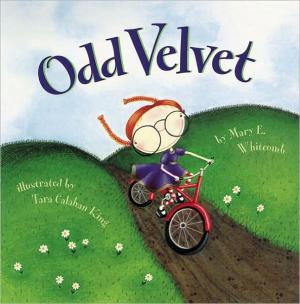
Odd Velvet

Odd Velvet by Mary E. Whitcomb

This book was published in 1998, and I have probably read it to a group of students every year since it was published. There is plenty here for all ages.

The main character, Velvet, is odd. It’s not just her name, it’s everything about her. She doesn’t have fancy clothes or a big box of crayons, and she doesn’t even like talking dolls! Then, using just eight crayons, Velvet wins an art contest, and the kids begin to see her with new eyes.

This is a lovely story for the beginning of the year because it is a story of learning to accept those who are different from ourselves. As you are building your classroom community, it’s a terrific message to send.

I use this book to launch my Graffiti Wall every year because the language is so marvelous. Be sure to check out the blog post and video where I explain how to do that!

Enemy Pie by Derek Munsun

It’s shaping up to be the worst summer ever. Jeremy Ross has just moved into the neighborhood, and he is public enemy number one! When the protagonist (who is not named) explains this to his dad, dad instantly gets it and helps hatch a plan – to invite Jeremy Ross over and feed him enemy pie. Dad makes the pie, and all the boy has to do is spend one day being nice to his enemy. As the boys spend a fun day on the trampoline and in the tree house, the protagonist realizes that Jeremy isn’t so bad after all, and he warns him not to eat the pie – the act of a true friend!

Enemy Pie (Reading Rainbow Book, Children's Book about Kindness, Kids Books about Learning)

This is a wonderful book to share with kids at the beginning of the year and talk about friendship. What makes a good friend? How can making assumptions about someone stop us from noticing their good qualities? Your kids will love the fun illustrations (by the same illustrator as Odd Velvet!) and you will love the way the discussion moves your classroom community forward.

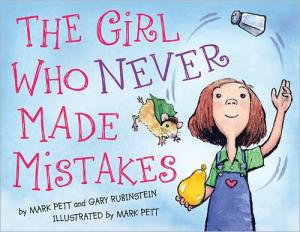
The Girl Who Never Made Mistakes

The Girl Who Never Made Mistakes by Mark Pett and Gary Rubinstein

Chances are, you will have at least one perfectionist in your class this year – one student who is afraid to take risks because they might fail. Chances are, it will be one of your highest performing students. This book is for that student.

Beatrice Bottomwell is known far and wide for never making mistakes. She never forgets her homework, she always makes a perfect peanut butter and jelly sandwich with the perfect amount of jelly, and she has won the city talent show three years in a row. She has fans waiting to greet her as she heads to school each morning. When she slips and falls carrying the eggs for a muffin recipe, she catches the eggs before they break. She is perfect! But she can’t stop thinking about her Almost Mistake. And she is so afraid of making a mistake that she won’t join her friends as they play on the frozen pond after school.

The night of the school talent show comes again, and everyone, including Beatrice, expects that she will win. But, her juggling act goes awry, and Beatrice finds herself standing on stage, covered in water, and trying to figure out how to handle the situation. That’s when the book becomes so perfect for the perfectionist. Beatrice laughs. And the audience laughs with her. What a wonderful way to handle utter humiliation!

This book is a really great model for handling life’s difficulties, whether students are perfectionists or not. Again, read this early in the year and have conversations about handling failure. If you make failure fine for your students, risk taking will be much more likely in your classroom.

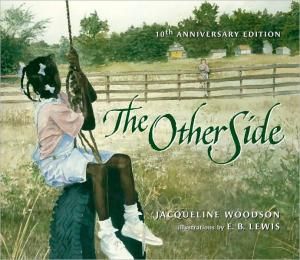
The Other Side

The Other Side by Jacqueline Woodson

This book is told in first person by a young, black girl. As you can see in the cover art, she lives on one side of a fence, and a little white girl lives on the other. Both girls are warned not to go on the other side of the fence because it is dangerous. Eventually, the girls realize that there is no rule about sitting on top of the fence, and in that middle ground, they meet and become friends.

Woodson has such a lovely way with words, so you could easily read this book just for the language. But, it is also a great book to read and discuss the artificial barriers that keep people apart. You can easily bridge to the artificial barriers that likely exist in your own classroom: race, class, language, economic status, cool kids… I have always found that bringing up those issues early in the year before too many problems arise is the best strategy for preventing them from sidetracking your classroom community. This book will help your students find their own middle ground.

Miss Malarkey Leaves No Reader Behind by Judy Finchler and Kevin O’Malley

This is the book I use to introduce my Reader’s Interest Survey. Be sure to check out the blog post about how I do that, and grab the Reader’s Interest Survey on TPT!

Miss Malarkey is determined to find each student a book they will love before the end of the year. The main character is pretty sure she will fail. After all, he hates reading. Maybe you’ve met a student like that….

One by one, his friends and classmates all get bit by the reading bug. But the main character remains completely unimpressed by books. Undeterred, Miss Malarkey keeps trying as he comes up with one reason after another to dislike her picks.

I think you can see why I love this book for the beginning of the year. I tell my students that I am just like Miss Malarkey. I am going to get to know them really well (starting with the Reader’s Interest Survey) and I am going to help them find books that they love. This book opens that door and starts to build our relationship around books.

As June rolls around, Miss Malarkey has gotten to know each of her students, especially the main character, very well. That knowledge of her students helps her find the perfect book for him. She gives him one, final book, hoping to hook him, and she does!

Using picture books in the intermediate classroom opens so many doors and helps you accomplish so many standards! I hope that these books, and the others that you will discover on your own, help you have a more literate classroom this year!

More Ways to Use Picture Books in YOUR Classroom!

  1. Satchel Paige – Striking Out Jim Crow – This blog post talks about how to use this book to hook fans of graphic novels and sports. It’s a great gateway book that leads to more reading!
  2. Twelve Fantastic Picture Books to Teach Black History – This blog post has so many teaching points, including a full video demonstration of one of the lessons, that I needed two posts to cover it all. Check out both parts here!
  3. Players in Pigtails – This is a marvelous historical fiction book about the All Women’s baseball league featured in the movie a League of Their Own. It’s a delightful picture book to share with students!

SpeedWriting – 30 Days, 10 Minutes to a More Literate Classroom

You’ve heard of SpeedDating, right? Well, one day I thought to myself, why not try SpeedWriting? And my kids loved it! Here’s how it works.

The idea is that students are trying a variety of Writing Prompts to see which one(s) seem a good match for them. Once they’ve found a prompt that inspires them, they get to write about it!

I usually have 24 – 26 students, so I hang 12 Task Cards around the room. Each Task Card has a prompt on it for the students to write about. These are sample Task Cards from my Writing Prompt Resource – Make Friends with a Book. Grab them on TPT!

I separate the students so there are 2-3 students at each prompt. Each student has their Writing Notebook and a pencil. I start the timer for 1 minute if I have a class full of reluctant writers, and 2 minutes if they are more confident writers. The students write about the prompt until the timer goes off, and then they rotate to the next Task Card. The timer starts again and students write about a new prompt. Within a few minutes, students have rotated to 12 different Task Cards and written 12 different responses. After 12 minutes, I ask students to return to their seats and spend another 30 minutes writing. Sometimes these writing prompts turn into something that students work on over time, polish and publish, and sometimes it is just something they work on for a few minutes.

What is so great about this is students are exposed to lots of ideas at once, and almost always, there is one that really grabs them. In fact, they almost always find more than one prompt that they like to write about! Another benefit is that students build stamina and writing endurance, and they become more flexible writers and thinkers. Lots of great benefits! I use SpeedWriting once a month or so, and my kids look forward to it every time!

Please grab this free download to help you try SpeedWriting in your classroom. This one-pager walks through the steps, and it is included in 12 Book-Themed Writing Prompts on TPT. Check it out today!

12 Quotes to Inspire Students to Make Friends with a Book

Books Are Best Friends Quotes

Books have been great friends of mine for my entire life. They have helped me through times of sorrow and grief, they have taught me the skills to master challenges, they have helped me escape to new worlds when this one was a little too much to take. Books are constant and continual friends for me.

So, it is probably not a surprise to you that I want my students to understand that books are our best friendsl. When I first mention the idea, some of my students roll their eyes. They are fifth graders, after all, and eye rolling is a skill they excel at and practice often. But, as the year rolls on, I notice many students quietly making friends with a book. Activities like Bring-a-Book-to-School Day help, and so do Quote Marks.

Quote Marks are simply book marks with encouraging, and sometimes funny, sayings on them. I generally post the quotes in the Book Nook, sometimes sticking them in surprising places for students to find as they peruse the shelves (for example, the quote from Diane Duane goes on the wall behind her tub of books). I put the same quotes on book marks and let students choose the ones they like. I also use the quote posters as Quick Write prompts to really get kids thinking about the quote. Many of the quotes express the author’s view of books as friends, so they reinforce that I’m not the only one crazy enough to think that!

I’ve put together some of my favorite Quote Marks as a resource on TPT. Click here to grab it! On TPT you will find the vintage style. Or, sign up for my newsletter and download a FREE Chalkboard Style Poster. Grab the style that works best for your classroom.

These are the quotes I’ve used in the resource in case you prefer to make your own.

“If you don’t like to read, you haven’t found the right book.”

J.K. Rowling

“Outside of a dog, a book is man’s best friend. Inside of a dog, it’s too dark to read.”

Groucho Marx

“Fairy tales are more than true: not because they tell us that dragons exist, but because they tell us that dragons can be beaten.”

Neil Gaiman

“Reading one book is like eating one potato chip.”

Diane Duane

“Never trust anyone who has not brought a book with them.”

Lemony Snicket

“…books gave Matilda a hopeful and comforting message: You are not alone.”

Roald Dahl

“It is well known that reading quickens the growth of a heart like nothing else.”

Catherynne M. Valente

“Think before you speak. Read before you think.”

Fran Leibowitz

“Books are the quietest and most constant of friends; they are the most accessible and wisest of counselors, and the most patient of teachers.”

Charles W. Eliot

“That’s the thing about books. They let you travel without moving your feet.”

Jhumpa Lahiri

“Books are good company, in sad times and happy times, for books are people – people who have managed to stay alive by hiding between the covers of a book.”

E.B. White

“You know you’ve read a good book when you turn the last page and feel a little as if you have lost a friend.”

Paul Sweeney

For more tips on how I use this in my classroom, check out this video. Thanks for stopping by today, and Happy Teaching!

Let’s Connect!

You can find Ms. Cotton’s Corner in various corners of the Internet – TPT, Instagram, Facebook, Pinterest and YouTube. See you there!

Check these places to ensure that you don’t miss a thing! And don’t forget to tell your friends! Sharing is Caring!

Book Bingo – 30 Days, 10 Minutes to a More Literate Classroom

Let’s talk genre. What is it? Why should we teach it? How does it help kids read better anyway?

Genre is a French word that means a kind or category. The English word gender comes from the same root. The word genre (plural genres) is generally used for artistic works. Music has different genres, and so does literature.

That’s all pretty interesting, but why spend precious time teaching about different genres? Well, as a teacher, part of my job is to unlock the different academic disciplines for my students. I want them to think like historians and scientists and artists. Genres unlock the organizing principles of the discipline of literature. As students learn about genres, they come to a deeper understanding of how texts work. And that leads to deeper comprehension.

The first thing to teach is some basic vocabulary. All books fit into the main categories of fiction and non-fiction. Please don’t teach your students that fiction is stories and non-fiction is facts. Instead, teach them that fiction comes from the writer’s imagination, although it can be based in reality. Non-fiction is literature that focuses on real people and real events and reports them factually. However, a good non-fiction writer can weave a story into the facts that can make it just as compelling as the craziest fantasy story!

Fiction comes from the writer’s imagination. Non-fiction focuses on real people and real events and reports them factually.

I begin teaching genre on the first day of school. For more about that, read this blog post on how I get students engaged with books right away, and every day. Once students have some familiarity with genres, we play Book Bingo with the whole class. Feel free to use your own Book Bingo, or check out this one on TPT. The first time we play, I use the included Caller Cards to name the genre for students to mark. That builds familiarity with the different genres and helps students grow their vocabulary.

The second time we play Book Bingo with the whole class, I don’t use the Calling Cards. Instead, before we play, I go to my Book Nook and grab one book to represent each genre. As we play, I place the book under the document camera and students use clues from the cover, the blurb, and even the inside of the book to infer the genre. The resource on TPT includes this Recording Sheet so that you can keep track of the books you have shown your students and easily know if they have a Bingo!

The second version of the game has several benefits. First, students are using the characteristics of the genre to make inferences. That is great critical thinking! Second, you are introducing students to 25 books from your classroom library, and they often find one they want to read. After we finish playing, I leave the books on the chalk tray for a few days, and most of them disappear into the hands of my students!

It is great to have students identifying books by their genre, but it’s not enough. I also want students to read widely across different genre. Wide reading is essential for building background knowledge. So, the next activity I use is an Independent Book Bingo card. Each student has their own Bingo Card and Recording sheet, and their goal is to Read-a-Bingo. Once they have read a book, the record the title and genre and cross it off. Five in a row is a Bingo!

The first time I use the Bingo cards as an independent activity, I ask the students to read five picture books. That lowers the affective filter and helps all students feel successful. Reading five picture books across different genres is also a great way to introduce the genres to students. A high quality picture book is not a huge commitment, and is a great way to build background knowledge and also to expose students and help them learn which genre they really enjoy.

Book Bingo is a fun way to bring genre to life in your classroom. This video post gives you a few more tips on bringing it to your classroom. Happy teaching!

The Book Nook – 30 Days, 10 Minutes to a More Literate Classroom

Every year my students walk in on the first day of school and are confronted with piles of books on their tables. And empty tubs. I put my students to work organizing the Book Nook (what I call my classroom library) on the first day, and for several days after that. Here’s why:

  • If the students come up with an organizing system, they will understand how to find the type of book that they like.
  • If the students organize the books in the first few weeks of school, they will be able to maintain that organization for the rest of the year.
  • Giving this task to students helps them feel ownership in the classroom, and especially, in the books.
  • This task is one of the best ways I know to teach kids about genre – something that is a pretty bedrock literacy understanding. For more ideas about that, check out this blog post!
  • This is a great strategy for Getting Kids Thinking About Books and also for Selling them on books!

This literacy strategy takes about 30 minutes on the first day, and then 10 minutes a day until all of the books are organized. The first day, students walk into the classroom (usually after recess) to find approximately 20 books on each of their table groups. My group size is 4-5 students, so that’s 4-5 books for students.

First, we gather on the rug to talk about what we are going to do with the books. I tell the students that they are responsible for figuring out how to organize the books in a way that will make them easy to find and easy to keep organized all year. Then I ask them, “What ideas do you have about how we could organize the books?” Often, no one answers. Sometimes, someone volunteers a way they have seen another classroom library organized. If they do give me an idea, I respond, “What do you all think? Will that help you find books and keep them organized?” I don’t endorse any system of organization because I want this to belong to the kids. Using a question focuses them on the criteria for success and builds that sense of ownership.

After a few minutes of discussion, I send them to their tables. I have chosen the books for each table purposefully. In each stack, there are different connections that students can make, and some books that may not fit together at all. I am deliberate in the books that I give to each group because I want to foster discussion and critical analysis of the books. How do these books fit together? Which books don’t belong?

For instance, if students found this book stack on their tables, they would probably notice that “Charlie and the Chocolate Factory” and “The Witches” are both by Roald Dahl, and suggest book tubs organized by author. They would also notice that this stack has a significant number of historical fiction books: “Sarah, Plain and Tall”, “Across Five Aprils”, “Sounder”, “Our Strange New Land”, “Sophia’s War”, and “Big, Bad Ironclad” could all fit in a tub labeled historical fiction. But, “Ghosts” and “Big, Bad Ironclad” are both graphic novels, so maybe that should be a tub too. Once they noticed that, I would ask them, “Where should you put the books so that you can find them and keep them organized? Which label will be more helpful? Is “Big, Bad Ironclad” mostly a graphic novel or mostly historical fiction?” That question causes kids to critically analyze themselves as readers AND the book!

Once a group has found several books that belong together, I give them an index card and a tub. Someone in the group is responsible for making the label for the tub, which I attach with clear Contact Paper or book rings, depending on the style of tub. I don’t expect them to finish the label in the 30 minutes because I want it to be high quality. The student just keeps the index card with them until it is finished, and then we attach it together.

Of course, there will be books on the table that the students don’t fit into any tub. Before we complete the work for the day, I ask the groups to leave the tubs on their tables, with any books that belong in the tubs. Books that don’t belong should be laying face up on the table. Then, one student from the group stays at the table to explain the group’s thinking to the other kids in the class. Groups rotate around the room. As they do, students start to notice that a book from one table might fit into a tub on another. In this example, “Mrs. Smith’s Spy School for Girls” would fit nicely in the Adventure Tub on another table. When students make those connections, I encourage them to take the book and add it to a tub.

To finish up, students bring the books that are organized to the Book Nook, and place any books that are not yet organized in a tub by my desk. There are always several kids who discover a book that they would like to read, and of course, they can borrow that for Independent Reading! The next day, we continue the process. I have a lot of books in my classroom library, so this generally takes us about 3 weeks. On average, the kids organize about 100 books a day.

This strategy definitely is a bigger time investment than some of the other strategies we’ve been learning about, but it really gets kids Thinking (with a capital T) about books AND it hooks kids and builds motivation. It is well worth your time! Plus, you get the added benefit of gaining time back because you won’t have much work to do to keep your classroom library organized. The kids will do it because they know how!

For more easy-to-implement ideas, be sure to check out the other blog and video posts in 30 Days, 10 Minutes to a More Literate Classroom. Happy teaching!

Image by Annata78 on Deposit Photos.

Book Chats – 30 Days, 10 Minutes to a More Literate Classroom

Today I want to talk to you about a really fun idea for connecting readers. Book Chats is a perfect activity for Back to School, and I use it when I want to strengthen connections and make new ones – for example, in January after the long break. To make this a no prep activity, grab my Book Chat resource from TPT. Just print and go or use on Easel!

The idea is simple – two readers interview each other about their interests and reading preferences, and then they choose books for each other! This is a powerful literacy strategy because:

  • Students make connections and talk about books!
  • It builds the idea that students should help each other find books that they will love. I’ve noticed that, weeks later, some partners are still bringing each other books!
  • As students are choosing books for each other, they often find books for themselves.

You will want to give yourself a little more than 10 minutes for this idea (I know, but still, it’s pretty quick!). I do this over two days, about 15 minutes each day. Spreading it out helps keep my Book Nook from getting too congested and it helps me fit it into a quick moment during the day. Here are the steps. Feel free to click each step if you want to read practical tips for bringing this to your classroom.

Students interview each other.

I usually spread this over two days. So, Day One, the first person interviews their partner and then goes Book Shopping. They try to put two or three books in their “shopping cart” for their partner. They present the books to their partner and explain why they think it’s a suitable book for their partner. You can purchase my Book Chats resource on TPT and use my Student Sheets, or create your own!

Students use what they have learned about each to choose 2-3 books that their partner will enjoy.

This can be tricky for some students and easy for others. One pitfall is the student who wants recommend every book. That student is having trouble discerning, and they may need your help narrowing things down for their partner, and maybe for themselves as well. Lots of unmotivated readers actually suffer from reading too many of the wrong books.

The shopper presents the books to their partner and tells them why they think they are a good fit.

This is the heart of the activity. As students are presenting to each other, you will hear a buzz of excitement in the room. Kids are discovering new books and new friends, and it’s a good moment to be a teacher!

The shopper is responsible for putting away any books their partner does not want to read.

Be sure to have the shoppers do the re-shelving. In theory, they removed the books from the shelves and should put them back!

And that’s it! It should take about 30 minutes total for kids to connect over books, but the connections they make to each other will last far longer. With a small commitment of time, your students will make some new connections and find new books to love. Grab your copy today and use it tomorrow!

Watch the video for more tips and a clip of me modeling the strategy with a fifth grader.

Building a Strong (Virtual) Writing Community in your Classroom

Across the country we are all gearing up for what promises to be a crazy year. A continuing global pandemic, distance learning, face to face instruction, elections… It’s a lot. As I think and plan for the year to come, I am going back to bedrock. By planting my feet on a few simple, time tested principles, I think my students and I will make it through the storm swirling around us.

Why writing, you may ask? Why not focus on math or reading? Well, in the words of the National Writing Project, “writing is a gateway for success in academia, the new workplace, and the global economy, as well as for our collective success as a participatory democracy.” Phew! That’s a pretty high bar! Pretty much every teacher I know has complained about kids’ inability to communicate their thinking in writing. So clearly, it’s important for school and for life beyond school.

With the probability of distance learning looming, building a writing community seems more difficult than ever. Usually I have the luxury of seeing my students every day and of building the community face to face (for a two-part series on how I usually start the year, read Winning Week 1 – Day 1 and 2.) This year, I’m not planning on that. I think all, or part, of our classroom time will be spent digitally. So here are the principles that hold true whether we are together or not. In the rest of this series, I will unpack how I plan to put these into practice face to face OR digitally.

  1. A strong writing community helps kids learn to love writing.
  2. A strong writing community reinforces the idea that we write to learn (about ourselves and our world) and to communicate ideas and feelings.
  3. A strong writing community reads – a lot!
  4. A strong writing community trusts each other.

Over the next three weeks, I will devote this blog to unpacking each of these ideas and giving you practical ways to implement them in your own classroom, whether you are face to face or distance learning. If you don’t already follow me, be sure to so you get each new update in your email!

Winning Week One – Day 2

This post focuses on how I begin the year in a physical classroom. Be sure to check out my series on starting the year with distance learning. New posts will be coming out every week about how I will do that this year!

I start Day 2 as I will begin every day – standing outside the classroom, smiling at each child and telling them with my words and my actions that I am happy to see them. I’ll tell you a secret. I’m terrible with names. Always have been. So, on the first day of school I snap a quick picture of each student, and later that night I give myself a quiz until I know everyone’s name. I hang the pictures in the room somewhere, and I am able to greet each child by name as they enter the classroom on the second day.

On day 1, the kids and I began getting to know each other. I really can’t stress how important it is to build those relationships as quickly as you can. That’s one of the reasons I don’t worry about the rules on the first day – I’m focused on building relationships and helping kids know that school will be focused on academics. I think it’s important to show kids what you value on the first day, and every day.

On day two, we continue in the same way. The focus is on learning and relationships, and I bring in another goal – student voice. Here’s how I do that.

We begin with Independent Reading time. On the second day students again find piles of books on their desks. Many have a book from yesterday, and the ones who don’t go for a book dive in the pile. I rotate from group to group to help kids find a book, and we settle in for quiet reading. I haven’t told kids my expectations yet, but I model them in the way I praise kids who get settled quickly and quietly. We try for 15 minutes of quiet reading. Then we gather on the rug for a discussion. I say, “This year we will spend a lot of time reading. Right now, I’m getting to know you all as readers. I noticed that many of you chose adventure books. I also noticed that some of you chose mysteries. Two of you chose books by Gary Paulsen. I want to get to know you as readers even more. In this class we will often use Turn and Talks. When you Turn and Talk, make sure that you talk to a person near you, and that everyone has a partner. I will give you a signal to finish your conversation, and then count down from 5 to 0. Finish and look at me by the time I get to 0. Turn and tell your neighbor one thing that helps you focus on reading during Independent Reading time.”

As the students Turn and Talk, I listen in to gather information about them as readers. I have given them a few of the expectations of Turn and Talk, and we will continue to practice and adjust this procedure until it is a smooth routine. For now, I put my hand in the air and put my fingers down one by one as I say, “Finish your conversation in 5-4-3-2-1-0.” As everyone finishes, I give a thumbs up to the students who turn to make eye contact. I do not continue the conversation until ALL students have made eye contact. I don’t give a verbal reminder, I just wait. Invariably, they all figure it out eventually, maybe with the help of their neighbor! ALL means all. No excuses.

Then I say, “As you were talking, I heard some people talk about noise level, I heard other people talk about space, and some of you talked about finding the right book. Those are all great things to think about when trying to focus on reading during Independent Reading time. Let’s make a chart and record some of the things that help you as readers.” I deliberately set the stage for students to focus on those important ideas. It’s entirely possible that they didn’t mention some of those things. But I get those ideas into the conversation because they are going to be important in setting the right environment for reading success. I then randomly call on students, and ask them to share their idea or their partner’s. After a Turn and Talk I will always call on students randomly, and I want them to know that now. It’s part of their accountability for Turn and Talk time.

We work together to make an Anchor Chart about things that help us as readers. Those then become the expectations for Independent Reading time. This is pretty much the same process I will use for developing procedures for math, science and writing. Over the next few days we will follow these steps to collaboratively develop procedures for every academic situation:

  1. Students do an activity (writing in journals, a science experiment…), Sometimes it goes well, sometimes it doesn’t.
  2. We debrief the activity, and how we can help each other to do our best.
  3. We co-create an Anchor Chart.
  4. Most importantly, we revisit the Anchor Charts every time we do the activity, and modify them. These are living documents, and for the first few weeks we will add, delete and modify them. They will not be beautiful, but they will get the job done.

Building classroom routines using a structure like this keeps the focus right where I want it – on academics, on building relationships and on building students’ belief that they can, and should, manage their own behavior.

On Day 1, I focused on modeling my expectations and praising students for following them. On Day 2, I ask the students to set the expectations for themselves. Occasionally a student will try to derail this process. They will say something like, “I focus on reading best when there is loud rock music playing.” The best way to handle that is to put out an open-ended question to the class. Something like, “How would that be for the rest of you? Would you be able to focus and read if there were loud rock music on the speakers?” Other students will shake their head no, so then I say, “Well, that might be hard for some of us. We need to make sure that all students can do their best. What if we play quiet, classical music while we read?” Of course, don’t suggest something you are not willing to do. If you want it silent, suggest that. When we begin tracking reading stamina, if you need to, you can do a controlled experiment where one day you play loud rock music and the other day you play quiet classical music. Even stubborn students can’t argue with data (although they may try)!

Just as I did on Day 1, I will make sure that there are plenty of academics on Day 2. We will have a reading lesson, a writing lesson and a math lesson. I gathered data on their writing stamina after my crazy Intro to Writing on Day 1. I use that information to plan Day 2 and to set a goal for Writing Stamina. Sometimes, it’s just 10 minutes. If I have a lot of reluctant writers, I will provide a funny picture prompt or an inspirational quote. I usually give a Writer’s Interest Survey or a Reader’s Interest Survey to continue building relationships and help me use students’ interests to guide my instruction all year. We will continue to get to know each other by reading Two Truths and a Lie, which we began on Day 1. And students will continue to organize the Book Nook in a way that makes sense for them and that they can maintain all year long.

Day 2 is all about building students’ understanding that they are in charge of themselves. That is a pretty novel idea for many learners, and one that we will work on together all year long. I continue growing our relationships, setting the expectation that school is about learning, and building classroom routines and procedures.

5 Reasons a Quick Reader’s Interest Survey Enhances Reading Instruction

Hop over to TPT to grab this Reader’s Interest Survey today! It will help you build relationships and plan reading instruction, and it’s no prep!

Read on to learn more!

Start the year right with a quick survey to get to know your readers. As you plan for effective reading instruction, a reader’s interest survey is a quick investment of time that pays off BIG! It gives you the data you need to ensure that your students are motivated to read, read, read! And as you know, the key to improving reading achievement is…. reading!

Read on to find out why spending 15 minutes on a Reader’s Interest Survey is the perfect way to get set up for strong reading instruction!

Reason 1 – Choosing Great Read-Alouds

Read-alouds are a key reading instruction strategy for motivating readers. The first read-aloud of the year sets the tone, so you want to get it right – and all the read-alouds that come after as well!  A Reader’s Interest Survey helps you find books that will resonate with your students and lead them to new reading discoveries of their own. It is important for intermediate students to read book series, and your class read-alouds are key for helping students discover new series to explore.

One year I was debating whether to read “The Lion, the Witch and the Wardrobe” to my students or “City of Ember”. both books are terrific, and lead students to keep reading because they want to discover the rest of the books in the series. I took a quick look at the data from my Reader’s Interest Surveys, and noticed that two students had listed “The Giver” as a favorite. That made my decision easy! I chose “City of Ember” and watched with delight as several students in my class devoured the rest of the series!

Reason 2 – Matching Individual Readers with Motivating Books

One of the greatest joys of teaching upper elementary is matching students with that perfect book that motivates them to love reading. We know that motivated readers read, and that key to motivation is student choice and voice. A survey will help you listen to your students and guide you to start with titles they already love, and then stretch them to new titles, new genre, and new authors.

Several years ago, I was teaching 4th grade. At our back-to-school night, Riley’s mother expressed her concerns that her son didn’t like to read and asked for my advice. So, I read Riley’s Reader’s Interest Survey carefully. And she was right. He did not like to read…. The only book he had ever enjoyed was “Nate the Great”, which he had read 2 years previously. I decided that “The Bad Beginning” might be a good place to start, and it is one of my favorite read-alouds for the beginning of the year. And it worked! Riley had never encountered another book like that, and he devoured the rest of the series in sort order. By December, I was recommending the Nathan Hale books, and then a few months later “The Mysterious Benedict Society.” By the end of fourth grade, Riley was a reader.

Reason 3 – Buying Books That Will Fly Off the Shelves!

Choice is an essential component of motivating readers, especially struggling readers.  The Reading Interest Survey will help you make wise choices on how to spend your hard-earned money. Looking carefully at your students’ responses helps you find the books that are engaging and effective for your readers. You don’t want to clean up at the end of the year and find books that have never had the cover cracked!

I will never forget Grace. Two years behind grade level, she was firmly convinced that she was not a reader. At the beginning of the year, she did not like reading. One of the questions on my Reading Survey is, “What do you like to do on the weekends?” She said she enjoyed babysitting her cousins. So, I dusted off “The Babysitters Club” series and gave her one to try. She loved it, and then made her way through many of the books in the series that year. At the end of the year, she proudly told me that she had read 18 books during the year – which was a huge improvement of the 5 she read in fourth grade. She had also made 2 years’ growth on the Reading STAR test! The Reader’s Interest Survey helped me match her with the perfect series.

Reason 4 – Enhancing Reading Instruction with Small Groups

As you know, small group strategies like Literature Circles and Book Groups help your students love reading and learn the skills they need to grow as readers. Reading is a social activity, especially in the intermediate grades.  The survey results will help you match students with other students, building a community in your classroom and growing the reading conversation! Not only will you improve reading comprehension and motivation, you will also help your students make connections with each other. Loneliness and anxiety are a growing problem for adolescents, so any way we can bring them together provides a huge emotional benefit. How many times have you made a new friend, or deepened an existing friendship, by discussing a good book? Use your survey results to match students with similar interests and connect them with the perfect book!

Reason 5 – Personalizing Reading Instruction by Getting to Know Your Students

Strong relationships are key to building a vibrant classroom community and managing student behavior.  A Reading Interest Survey is a great tool for helping you quickly get to know your students. A few minutes spent reading the answers will help you have great conversations with your students – the building blocks of the relationships that will set you up for success.

What do Teachers Say?

“I use this at the beginning of the year to get to know my new students and what interests them. It allows me to be on the lookout for books that match up with student interests, throughout the year.”

-Tamara B.

Rating: 5 out of 5.

“Well laid out, easy to use and easy for the students to understand.”

-Jennifer G.

Rating: 5 out of 5.

Recent Blog Posts

Let’s Connect!

You can find Ms. Cotton’s Corner in various corners of the Internet – TPT, Instagram, Facebook, Pinterest and YouTube. See you there!

Check these places to ensure that you don’t miss a thing! And don’t forget to tell your friends! Sharing is Caring!