Tag Archives: reading strategies

How-To Hook Kids on Books with This Simple Reading Strategy

Students gathered for a Book Pass

Are you interested in helping your intermediate students find a book they love? Are you launching a book project, or Book Clubs? If the answer to any of those questions is yes, and you have 15 minutes, then Book Pass is the Reading strategy for you. Read on!

What is Book Pass?

Book Pass is a really simple Reading strategy to hook kids on books, and it’s perfect for launching your Book Clubs or for having kids do a Book Project. By the end of 15 minutes, every student in your class will have a book to read. But better than that, they will likely have one or two more that they would LIKE to read. And helping readers build a reading plan and live a reading life is one of our greatest privileges as teachers. Read on for the simple how-to!

For a Book Pass, all you need is one book per student and about 15 minutes. I use this strategy to launch Book Clubs, so I gather multiple copies of each title – usually I offer 5 choices for a Book Club. So, I need about 5 copies of each book. Arrange the books in a circle on the floor, putting the books in a repeating pattern. You want the books to be organized so that students will see each book but not preview a book more than once.

Simple Steps to the Book Pass Reading Strategy

Book Pass is simple, and once you have gathered the books, all you need is sticky notes. So, no prep needed!

  • Gather one book per student.
  • Set the books out in a circle, making sure that the books are in a pattern to ensure that no student previews the same book.
  • Have the students sit in a circle around the books, and set a timer.

That’s it!

Detailed Steps for Bringing Book Pass to Your Classroom

Choose Great Texts

I use Book Pass to launch Book Clubs, so I start with 5 copies of each text. I find texts with a variety of reading levels, generally around a common theme. Five choices of text provides enough choice that students can usually find a text they are excited about. In the image, you can see recent Book Club choices centered around a theme of classics – old and new. I chose traditional classics like “Shiloh“, but also included a non-fiction choice about Black soldiers in the Revolutionary War – “The Untold Story of the Black Regiment – Fighting in the Revolutionary War” and “Outcasts United”, a modern story about a soccer team made up of refugees from around the world. The variety of texts captured student’s interest, and our guiding question was, “What makes a classic book?” We had some outstanding conversations about that question.

Gather Students Around the Books

The students sit behind the books and begin by previewing the book in front of them. Remind them that good readers preview a book by looking at the cover, reading the blurb and opening the book and reading an excerpt. Set a timer for two minutes. In that two minutes the students are quietly perusing the book and asking themselves one question. “Is this a good book for me?”

Once the two minutes are up, students pass the book to their right. Then, they take their new book, and spend 2 minutes with it. Keep to a two minute timer. I’ve found that it is long enough for a student to get a good sense about a book but not so long that they get bored and start talking. 🙂

After 10 minutes, every student in your class has previewed 5 books. I then collect the books and pass out a sticky note to each student. On the sticky note they write their name and their top three choices, in order. Within a few minutes, I can sort through the sticky notes and most often can get a student their first or second choice of book. Just like that, we are ready to get started with Book Clubs!

Using Book Pass to Launch a Project

I love using projects in my classroom. If you do too, Book Pass is a great way to launch a project. Sometimes, I like to let students choose any book for a project, but there are times when I do want some structure. When you want that structure, begin with a Book Pass. If you limit the choices for a Book Project and use a Book Pass to launch the projects, you get a couple of benefits.

  1. You don’t have to read 27 different books – just the books that you offer!
  2. Kids who are reading the same book can meet to talk and share ideas.
  3. Students will get excited about reading the books their friends are reading.

But, teacher, I didn’t get to read that book…

I love having the solve the problem of not-enough-books for all the students who want them. After a Book Pass, you are likely to find several students who want to read more than one book, I mean, they REALLY want to read them. And, after their friends have read the book, that itch may become unbearable for some students. One year I offered “Artemis Fowl” as a choice in the first Book Pass of the year, and kids were so upset when I didn’t have enough copies for them all. What a lovely problem to have!

No worries – the solution is pretty simple. After the project or Book Club cycle has finished, I always make the copies available to the whole class. Intermediate students are a little like lemmings – if their friends are reading it, they are happy to go along and read it too. I can still hear the sighs of relief after that first Book Pass when kids realized they would ALL get to read “Artemis Fowl” if they just had a little patience. One of the really lovely things about this simple strategy is the conversations that happen organically all year when you hear kids say things like, “Have you read Artemis Fowl yet? It is so good! Can you believe….”

Book Pass is a really simple Reading strategy that helps your students find a book to read – you will hook them on at least one book, and maybe more! Try this strategy every month or so to expose your students to new books and keep them reading!

Let’s Connect!

You can find Ms. Cotton’s Corner in various corners of the Internet – TPT, Instagram, Facebook, Pinterest and YouTube. See you there!

Check these places to ensure that you don’t miss a thing!

And don’t forget to tell your teacher friends. Sharing is caring!

Happy Teaching!

Susan

Need More Ideas for YOUR Classroom?

Check out these recent blog posts. Enjoy!

Christmas Kindergarten Math Activities: FREE Gingerbread Math Game

December can be a crazy time! Keep the learning going strong with Christmas kindergarten math activities like this gingerbread-themed number sense game. This FREE download includes 2 versions – Make 5 AND Make a Ten! You also get spinners, differentiated recording sheets, and two independent practice pages. It is easy to prep, and engaging for…

Decoding in Kindergarten- The Science of Reading

Recently I’ve been blogging about my journey of exploration into the Science of Reading. Be sure to check out some of these other posts if you’ve missed them: The more I dive into the Science of Reading, the more I am using the Simple View of Reading and Scarborough’s Reading Rope to guide instruction in…

Mastering Decimal Place Value with a FREE Game

This blog explores the importance of foundational understanding of decimal place value and whole number place value. Strategies include using games like Place Value Spin to build concepts of place value, connecting whole numbers to decimals, and a free instructional video to use with your students.

What IS Science of Reading Anyway?

Click to jump right to these sections:

  1. What is Balanced Literacy, Really?
  2. So, Balanced Literacy Might Not be Enough?
  3. Is Science of Reading the Answer?

“As for comprehension, the most important factor in determining whether readers can understand a text is how much relevant vocabulary or background knowledge they have.”

The Knowledge Gap, by Natalie Wexler (see my review of the book in this blog post)

That quote has been ringing in my ears for the past few weeks. Like many of you, I have been learning about Science of Reading. I listened to the Sold a Story podcast with dismay. When I finished the podcast, I dusted off my bruised heart, and then asked myself, “What now? Do I make drastic changes to the literacy program in my kindergarten classroom? Am I hurting kids with my balanced literacy approach?”

Here’s the thing, I’ve been teaching long enough that I can remember the heated Reading Wars. When I entered the profession in 1995, teachers were still asking themselves which was better, Phonics or Whole Language? And then, in 1996, my aunt, a Reading Recovery Teacher, sent me “Guided Reading, Good First Teaching for All Children” by Fountas and Pinnell. And I had my answer. We should teach both.

That was my first exposure to the idea of balanced literacy. Fountas and Pinnell did spend more time talking about comprehension than decoding, but Word Work was intended as part of the lesson. As a young teacher, I had methods courses on phonics in college, but the world of reading strategies was new to me. I immediately resonated with it. It matched my own experience as a reader, and it felt really good. I felt like the Word Work was easy to teach, so I was grateful for their insights into engaging students in authentic text, and helping them develop comprehension, and along the way, to fall in love with reading.

What is Balanced Literacy, Really?

Balanced Literacy is taking a beating right now, and so are Fountas and Pinnell. In a recent blog post, Fountas and Pinnell said, “… in 1996 we used the word “balanced” as an adjective when describing a high-quality language and literacy environment that would include both small-group and whole-group differentiated instruction that included the various types of reading and writing, letter and word work, oral language, observation, assessment, homeschool connections, all supported by good teaching.”

I spent many years working to become proficient at all the things included in that quote. I learned how to take running records and how to understand MSV. I learned what to do when a student did not use ALL of the cues (including visual letter cues) to read accurately, and I learned how to improve oral language so that reading comprehension would also grow. I learned how to manage whole class and small group instruction in every grade, K-5, and I improved my skills as a writing teacher. I opened my classroom as a lab and invited other teachers to observe my practice and reflect on it with me – a process that helped me as much as it did them. I trained teachers in many of the things that I was learning.

And I had decent scores on state tests. I live in Washington state, and our first high-stakes test was called the WASL. I was there when they rolled it out, and my kids did OK. Then we had the MSP, and finally the SBAC. My kids always do fine. I’ve spent my entire career teaching in schools with high poverty rates and usually many multi-language learners, and my kids made good growth each year. But, despite my best efforts, I never reached my goal of 100% of students at standard on the test….

So, Balanced Literacy might not be enough…..?

In my quest to help all students reach the standard, I did what I always do. I read, I researched, and I learned. I tried new things in my classroom. And in 2004 I read this book, “Building Background Knowledge for Academic Achievement”. If you know Marzano’s work, you know that he approaches a question by studying ALL the available research around it – his conclusions are based on meta-analysis. That means hundreds, or even thousands of research studies. Better him than me!

In this book Marzano makes the case that academic achievement will increase when kids know stuff. In other words, background knowledge, also called schema, is key to helping kids comprehend and achieve at high levels. During the past 20 years, as school systems struggled to meet the demands of the high stakes tests, they have reduced and eliminated instruction in any subject that isn’t tested. So, it is normal for students to spend an entire year in an elementary classroom learning only reading, writing and math. If a student is lucky, science might get a little time. But the bulk of instruction time is spent on reading and math.

Since many published reading curricula focus on fiction, the majority of time is not even spent reading content. So students are not building background knowledge, which means they are not gaining the skills and vocabulary that they need to comprehend. Marzano made the case for building background knowledge in 2004. Natalie Wexler is making that case in The Knowledge Gap right now.

Is Science of Reading the Answer?

Well, yes and no. It is important to pay attention to what cognitive science tells us about reading development. But we can’t be simplistic and cherry pick the science. It is tempting to pay attention to the Science of Reading that is quantifiable. It is easy to assign certain phonetic skills to kindergarten, others to first grade etc. Systems love that kind of clarity, and I suspect, that’s why Science of Reading is becoming synonymous with systematic phonics.

But it’s not going to be enough. If the pendulum swings back to an all-phonics approach, we are going to face the same problems we faced in the 1990’s when kids could fluently decode any text, but they didn’t have any idea what the text was about. Right now, we need to take a good look at ALL of the Science of Reading – everything. There is a growing bank of cognitive research around what really works to help ALL students become good readers. The short answer is not a simple list of phonics skills to teach, it is much more complext than that.

Come on this journey with me as I dive into the Science of Reading. Together let’s explore what cognitive science says about reading proficiency. Let’s learn how phonics is part of the puzzle, and figure out which phonics skills should be taught when. Let’s understand the importance of vocabulary and background knowledge in fostering comprehension, and let’s figure out which reading strategies lead students to greater success as readers, not just in elementary school but in life.

Cognitive Science has answers for us, and together we can bring reading success to ALL of our students by bringing the science to our classrooms. This is going to be a lot of fun!

Ready for Part 2? Click here for the next post in this blog series.

What IS Science of Reading?

Christmas Comprehension Activity – The Legend of the Poinsettia – Past FREEBIE

Christmas Comprehension Activity

Update: This awesome giveaway is over, but you can still grab this terrific Christmas Comprehension Activity on TPT. Be sure to follow MsCottonsCorner so you never miss a FLASH FREEBIE again!

Today’s FLASH FREEBIE is The Legend of the Poinsettia – an engaging Christmas Comprehension Activity based on a traditional tale from Mexico! It is FREE for 24 hours! Grab it on TPT right now before the price goes back up! And be sure to follow me on TPT and Instagram to get all 12 FREEBIES in December!

Are you looking for a retelling of a beautiful story to engage and inspire your students? This Christmas Comprehension Passage, written at a 4th grade reading level, tells the story of a miracle in Mexico and is full of heartwarming details. The story will inspire you and your students, and your kids will have a great time with the poinsettia craft. You’ll appreciate the text dependent questions which keep the focus on learning!

What is included in this Christmas Comprehension Activity?

This is a traditional Christmas tale from Mexico. It tells the legend of the poinsettia and shares a simple message – a gift from the heart is always the most beautiful. It comes with a poinsettia craft activity that helps students practice synonyms and also with text dependent questions.

The story is included in the Winter Tales from Around the World, a Google Forms Escape Room. This download includes additional comprehension and vocabulary activities and is perfect to use before the Escape Room. Grab both and keep students busy and learning in this build up to Winter Break time!

What do teachers say about this resource?

“My students loved it! Thank you. This resource saved me so much planning time.”

-M. Prieto

Rating: 5 out of 5.

“My students have really enjoyed this resource. Thank you!”

-Vicki A.

Rating: 5 out of 5.

Do you need more easy-to-use resources?

You can grab this resource, and three other Reading Comprehension Passages to celebrate Winter Holidays Around the World in the money-saving bundle, or just grab the resources you need.

Gryla and the Yule Lads – Christmas traditions in Iceland – Reading Comprehension Passage with text dependent questions and Idiom Task Cards.

Christmas Down Under – Non-fiction Reading Comprehension passage from Australia with text dependent questions and parts of speech practice

The Hanukkah Candle – fiction and non-fiction paired text with text dependent questions and a vocabulary Word SearchThis resource includes a heartwarming story from Mexico about a gift from the heart. The text is written at a fourth grade level, making it accessible for most intermediate students. They will love this charming tale! The resource also comes with text dependent questions to help students practice inference and summarizing, and a Synonym Craftivity to build vocabulary!

To extend the learning, grab The Legend of the Poinsettia by Tomie de Paula. His charming retelling of the same legend will give you opportunities to use the resource activities for a Shared Reading Activity OR have students compare and contrast the two versions. You have options! (As an Amazon Affiliate, if you make a purchase from clicking this link, I may earn at no cost to you. Win win!)

Follow for more FREEBIES!

There are still 6 MORE FREEBIES in the month of December! Watch for more postings about them on this blog and at MsCottonsCorner on Instagram! And one brand new resource will be revealed in my TPT store. Follow me all three places to ensure that you don’t miss a thing!

And don’t forget to tell your teacher friends. Sharing is caring!

Happy December!

Susan

FLASH FREEBIE #5 – Gryla and the Yule Lads

Update: This awesome giveway has ended, but you can still grab this terrific Reading Comprehension Passage on TPT. Be sure to follow MsCottonsCorner so you never miss a FLASH FREEBIE again!

This charming tale from Iceland is the fifth FLASH FREEBIE of 12! It is FREE for 24 hours! Grab it on TPT right now before the price goes back up! And be sure to follow me on TPT and Instagram to get all 12 FREEBIES in December!

This resource includes a charming fiction tale from Iceland. Gryla and the Yule Lads are traditional characters from Iceland – they play tricks as they roam the land, leaving gifts for good children and rotten potatoes for naughty ones! The resource also comes with summarizing practice using the Somebody Wanted But So Then format (SWBST). There are teaching supports to help the students summarize the story. The resource also includes 12 Winter Idiom Task Cards with a fun riddle for figurative language practice.

Low prep – just print and teach!

There are still 7 MORE FREEBIES in the month of December! Watch for more postings about them on this blog and at MsCottonsCorner on Instagram! And one brand new resource will be revealed in my TPT store. Follow me all three places to ensure that you don’t miss a thing!

And don’t forget to tell your teacher friends. Sharing is caring!

Happy December!

Susan

Christmas Down Under – FLASH FREEBIE #4

Update: This awesome giveaway has ended, but you can still grab this fantastic Reading Comprehension Passage on TPT. Be sure to follow MsCottonsCorner so you never miss a FLASH FREEBIE again!

The fourth FLASH FREEBIE is Christmas Down Under. It is FREE for 24 hours! Grab it on TPT right now before the price goes back up! And be sure to follow me on TPT and Instagram to get all 12 FREEBIES in December!

This resource includes a non-fiction text that briefly explains some of the traditions of Christmas in Australia. It also includes a text of the lyrics to a favorite Australian Christmas Carol, Six White Boomers. I’ve turned the lyrics into a fun Mad Lib for extra parts of speech practice! The resource also comes with text dependent questions to help students practice inference and summarizing.

There are still 8 MORE FREEBIES in the month of December! Watch for more postings about them on this blog and at MsCottonsCorner on Instagram! And one brand new resource will be revealed in my TPT store. Follow me all three places to ensure that you don’t miss a thing!

And don’t forget to tell your teacher friends. Sharing is caring!

Happy December!

Susan

FLASH FREEBIE #2 is FREE for a few more hours!

Update: This great giveaway has ended, but you can still grab this fun Mad Lib to Twas the Night Before Christmas on TPT. Be sure to follow MsCottonsCorner so you never miss a FLASH FREEBIE!

Did you grab it yet? Be sure to follow MsCottonsCorner on Instagram so you find out about ALL of the Flash Freebies the moment they are FREE! Today’s teaching resource is still FREE for a few more hours! Grab it today!

Hint: Santa Claus is Coming to Town! And you need to teach parts of speech, so you here you go!

There are still 10 MORE FREEBIES in the month of December! Watch for more postings about them on this blog and at MsCottonsCorner on Instagram! And one brand new resource will be revealed in my TPT store. Follow me all three places to ensure that you don’t miss a thing!

And don’t forget to tell your teacher friends. Sharing is caring!

Happy December!

Susan

Did you get the first FLASH FREEBIE?

Just a quick reminder that the Twelve Days of Giveaways has started! There’s still time to find MsCottonsCorner on Instagram and get the link to the first FLASH FREEBIE! (Hint: Winter is coming! On December 21 to be exact. You may want to teach about that….. )

The first resource will be totally FREE for just a few more hours!

There are still 11 MORE FREEBIES in the month of December! Watch for more postings about them on this blog and at MsCottonsCorner on Instagram! And one brand new resource will be revealed in my TPT store. Follow me all three places to ensure that you don’t miss a thing!

And don’t forget to tell your teacher friends. Sharing is caring!

Happy December!

Susan

Five Fiction Picture Books to Start the School Year Right! – 30 Days, 10 Minutes to a More Literate Classroom

Why use picture books in the intermediate classroom? Won’t the kids think they are babyish? Well, that might have been true once (although I could make the case that it was NEVER true), but in recent years, authors have been putting out some amazing picture books aimed at older readers, and even for adults. A high quality picture book has sturdy paper, brilliantly colored illustrations and engaging text. I use picture books in my classroom all year long. Here is why:

  • I can read them in about 10 minutes!
  • They are easy to reread. I often read a picture book for one purpose, and then revisit it for another purpose.
  • The pictures help carry the meaning of the story and provide important scaffolding for ELLs and students with low language skills.
  • Students love to reread them. A picture book doesn’t feel like a major commitment. Even in fifth grade, some students feel overwhelmed by reading chapter book after chapter book. High quality picture books can fill a gap and give students a little rest while still keeping them reading!
  • Students need to be exposed to a wide range of non-fiction, and picture books are a great way to bring that into the classroom. Over the 25 years I’ve been an educator, content standards have narrowed considerably, and it is causing students to be less engaged in school. I don’t blame them! Picture books are a great way to widen their horizons and help them find topics and content that interests them. I meet required reading and writing standards AND engage students in interesting content at the same time.

Following is a list of my favorite fiction books for starting the school year. Be sure to check out tomorrow’s post to get the list of my favorite non-fiction picture books for back to school. I will read all of these books to my fifth graders in the first month of school. There is a lot of junk out there, but I promise, these will all be great reads in your classroom too! Links are to Barnes and Noble in case you need to add any to your classroom library.

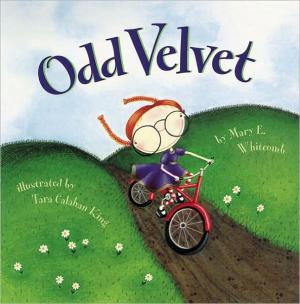
Odd Velvet

Odd Velvet by Mary E. Whitcomb

This book was published in 1998, and I have probably read it to a group of students every year since it was published. There is plenty here for all ages.

The main character, Velvet, is odd. It’s not just her name, it’s everything about her. She doesn’t have fancy clothes or a big box of crayons, and she doesn’t even like talking dolls! Then, using just eight crayons, Velvet wins an art contest, and the kids begin to see her with new eyes.

This is a lovely story for the beginning of the year because it is a story of learning to accept those who are different from ourselves. As you are building your classroom community, it’s a terrific message to send.

I use this book to launch my Graffiti Wall every year because the language is so marvelous. Be sure to check out the blog post and video where I explain how to do that!

Enemy Pie by Derek Munsun

It’s shaping up to be the worst summer ever. Jeremy Ross has just moved into the neighborhood, and he is public enemy number one! When the protagonist (who is not named) explains this to his dad, dad instantly gets it and helps hatch a plan – to invite Jeremy Ross over and feed him enemy pie. Dad makes the pie, and all the boy has to do is spend one day being nice to his enemy. As the boys spend a fun day on the trampoline and in the tree house, the protagonist realizes that Jeremy isn’t so bad after all, and he warns him not to eat the pie – the act of a true friend!

Enemy Pie (Reading Rainbow Book, Children's Book about Kindness, Kids Books about Learning)

This is a wonderful book to share with kids at the beginning of the year and talk about friendship. What makes a good friend? How can making assumptions about someone stop us from noticing their good qualities? Your kids will love the fun illustrations (by the same illustrator as Odd Velvet!) and you will love the way the discussion moves your classroom community forward.

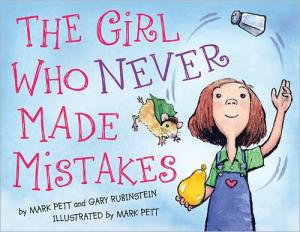
The Girl Who Never Made Mistakes

The Girl Who Never Made Mistakes by Mark Pett and Gary Rubinstein

Chances are, you will have at least one perfectionist in your class this year – one student who is afraid to take risks because they might fail. Chances are, it will be one of your highest performing students. This book is for that student.

Beatrice Bottomwell is known far and wide for never making mistakes. She never forgets her homework, she always makes a perfect peanut butter and jelly sandwich with the perfect amount of jelly, and she has won the city talent show three years in a row. She has fans waiting to greet her as she heads to school each morning. When she slips and falls carrying the eggs for a muffin recipe, she catches the eggs before they break. She is perfect! But she can’t stop thinking about her Almost Mistake. And she is so afraid of making a mistake that she won’t join her friends as they play on the frozen pond after school.

The night of the school talent show comes again, and everyone, including Beatrice, expects that she will win. But, her juggling act goes awry, and Beatrice finds herself standing on stage, covered in water, and trying to figure out how to handle the situation. That’s when the book becomes so perfect for the perfectionist. Beatrice laughs. And the audience laughs with her. What a wonderful way to handle utter humiliation!

This book is a really great model for handling life’s difficulties, whether students are perfectionists or not. Again, read this early in the year and have conversations about handling failure. If you make failure fine for your students, risk taking will be much more likely in your classroom.

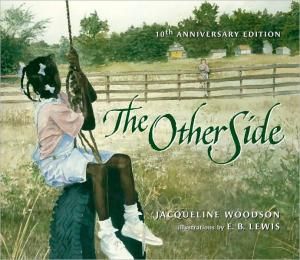
The Other Side

The Other Side by Jacqueline Woodson

This book is told in first person by a young, black girl. As you can see in the cover art, she lives on one side of a fence, and a little white girl lives on the other. Both girls are warned not to go on the other side of the fence because it is dangerous. Eventually, the girls realize that there is no rule about sitting on top of the fence, and in that middle ground, they meet and become friends.

Woodson has such a lovely way with words, so you could easily read this book just for the language. But, it is also a great book to read and discuss the artificial barriers that keep people apart. You can easily bridge to the artificial barriers that likely exist in your own classroom: race, class, language, economic status, cool kids… I have always found that bringing up those issues early in the year before too many problems arise is the best strategy for preventing them from sidetracking your classroom community. This book will help your students find their own middle ground.

Miss Malarkey Leaves No Reader Behind by Judy Finchler and Kevin O’Malley

This is the book I use to introduce my Reader’s Interest Survey. Be sure to check out the blog post about how I do that, and grab the Reader’s Interest Survey on TPT!

Miss Malarkey is determined to find each student a book they will love before the end of the year. The main character is pretty sure she will fail. After all, he hates reading. Maybe you’ve met a student like that….

One by one, his friends and classmates all get bit by the reading bug. But the main character remains completely unimpressed by books. Undeterred, Miss Malarkey keeps trying as he comes up with one reason after another to dislike her picks.

I think you can see why I love this book for the beginning of the year. I tell my students that I am just like Miss Malarkey. I am going to get to know them really well (starting with the Reader’s Interest Survey) and I am going to help them find books that they love. This book opens that door and starts to build our relationship around books.

As June rolls around, Miss Malarkey has gotten to know each of her students, especially the main character, very well. That knowledge of her students helps her find the perfect book for him. She gives him one, final book, hoping to hook him, and she does!

Using picture books in the intermediate classroom opens so many doors and helps you accomplish so many standards! I hope that these books, and the others that you will discover on your own, help you have a more literate classroom this year!

More Ways to Use Picture Books in YOUR Classroom!

  1. Satchel Paige – Striking Out Jim Crow – This blog post talks about how to use this book to hook fans of graphic novels and sports. It’s a great gateway book that leads to more reading!
  2. Twelve Fantastic Picture Books to Teach Black History – This blog post has so many teaching points, including a full video demonstration of one of the lessons, that I needed two posts to cover it all. Check out both parts here!
  3. Players in Pigtails – This is a marvelous historical fiction book about the All Women’s baseball league featured in the movie a League of Their Own. It’s a delightful picture book to share with students!

Lesson Plan – Teaching the Civil Rights Movement

As we celebrate the holiday in honor of Dr. King and move into Black History month in February, I want to share one of my favorite resources for teaching the Civil Rights Movement with you. As an extra bonus, these BOOM Cards are digital, so you can use them no matter your teaching situation! Here is how I used these BOOM Cards this year in person, AND how I modified the lesson last year for remote learning. Whatever your teaching situation, I’ve got you covered!

Make sure to check out the FREE resources linked at the bottom of the post!

In Person Instruction

Activate Background Knowledge:

I begin the lesson by asking students, “What are Civil Rights? Who has Civil Rights? Do you?” This question activates students’ background knowledge and also their curiosity. In truth, the phrase Civil Rights is used so frequently that it has kind of lost its meaning. So, we have a brief discussion about Civil Rights.

This year, one of my students gave a great example. He said that Civil Rights are the rights that people have but that he doesn’t have as many civil rights as adults because he is a child. He used driving as an example. My class had a great discussion about the rights, and responsibilities, of being a driver. We then talked about other examples of people who had, or did not have, Civil Rights. They mentioned voting rights, rights to an education, and the right to choose your own job.

Objective:

After we activate background knowledge and curiousity about Civil Rights, I give students the objective for the lesson. Along with this main objective, they will also have the opportunity to practice inferring and deepen their understanding of key vocabulary.

After completing these digital task cards, students will be able to summarize key events from the Civil Rights Movement and place them in order on a timeline.

Teaching the Content:

For this lesson, I ask each student to log into the BOOM Cards on their own computer, but sit in groups of three. As the lesson progresses, we will bounce back and forth from whole class to small group to independent work.

The task cards begin with the arrival of the first Africans on the White Lion. (If you want a more detailed resource about that, be sure to check out this resource – The First Africans; a leveled reading passage with comprehension questions.) I ask my students to read the text on the first task card to themselves. Then, in their group, I ask them to discuss what they see in the image on the Task Card. In this case, a picture really is worth a thousand words.

The next two Task Cards talk about the Emancipation Proclamation and Jim Crow laws. I teach students how to read Emancipation Proclamation, and then ask them to read the next two cards in their group. As a class, we discuss the mearning of the word segregation, and the students answer the question on the task card independently.

The next three task cards deal with desegregating the military, schools, and busses. Students read these task cards in their groups, and then we discuss boycotts. I begin the discussion by asking students, “Do you think a boycott can be successful at changing something in society?” It’s a good discussion because the text evidence is all about the Supreme Court making the changes, and so students are divided on whether or not they think the boycotts were effective.

-Lesson Break-

This is usually a good place to break the lesson up. One of the things I love about BOOM Cards is that they automatically save a student’s progress. I think it is more powerful to spread this content over two days than to cram it all into one day. The kids need time to process this information, and they usually come back on the second day even more eager to learn the next part of the story.

If you break the lesson up, begin the second day by projecting the task cards your students have already read. I gather the students on the rug WITHOUT their computers and we go through the first task cards together. This helps remind them of what they already know, and also gives ELLs and struggling readers a chance to revisit key vocabulary and ideas.

The next card teaches students about the sit-ins at the Woolworths counters. We discuss what it means to be denied service and then I ask, “Do you think a sit-in will be effective?” Just like with the boycotts, students are usually mixed on their views.

The next card is about the Children’s Crusade, and in my experience, is the card that students have the strongest reaction too. For that reason, I always read that task card aloud to them. After I read the card, I turn to the next card and we analyze the photo of the Children’s Crusade as a class. Together, these two task cards really are the meat of the resource. Once we have discussed the photo, students usually have no trouble making an inference about the photographer’s purpose in taking the photo.

At this point in the lesson, it is time to release students to work independently on the rest of the task cards. I always try to gradually release responsibility to the students, and this is a good place to get them to work independently. They will answer a question about the March on Washington, organize key events on a timeline and fill in the blank to answer vocabulary questions.

Remote Learning

The basic flow of the lesson is the same, whether or not I teach in person or remotely. However, these digital tools help the lesson go better remotely.

Activate Background Knowledge:

I use a Jamboard for this. I asked each student to respond to one of the Jamboards. Engaging students remotely is very difficult. By giving them a choice (which question do you want to respond to?) and requiring their participation, I was able to hook the students. We then briefly discussed and organized their responses to group similar ideas.

Objective:

This doesn’t change for remote learning.

Teaching the Content:

For remote learning, I did not break the lesson up over two days. I began the lesson by reading the first 3 slides to the kids and working through them as a whole group. I then sent them to Breakout Rooms to work on the rest of the slides as a group of three – again, gradually releasing resposibility to the students. I checked in on the groups often to help keep them on track. And then I ask each student to complete, in addition to the BOOM Cards, a padlet answering the question, “Which event from the BOOM Cards do you think was most important in increasing Civil Rights for African Americans? Why was it important?”

I hope that this lesson plan helps you see ways to use these BOOM Cards in your classroom, no matter what your teaching situation is. If you have never used BOOM Cards, you can get a free trial here. Start with these FREE BOOM Cards about the Women’s Suffrage Movement from my TPT store, and if you love them, grab the Civil Rights Movement BOOM Cards. I think you will find that they are a versatile tool for your classroom, no matter your teaching situation.

Happy Teaching!

Click the pictures below for Easy-to-Use resources for teaching Civil Rights.

Click the pictures below for FREE Civil Rights resources!

Making a Spiral Thinking Strip

Header for Making a Spiral Thinking Strip

Making a Spiral Thinking Strip is easy! This craftivity will make a small book with 16 pages. It’s perfect for summarizing a chapter book (see this blog post on using it to summarize Bridge to Terabithia for more info on that!)

Spiral Thinking Strips are also great for:

  1. Recording math fact families
  2. Sequencing
  3. Gathering text evidence
  4. Making words with prefixes or suffixes
  5. and many more ideas!

Make sure to scroll to the bottom of this post for a video demonstration of how to make the Spiral Thinking Strip!

Materials

To make a Spiral Thinking Strip, all you need is a piece of paper and a pair of scissors. In this example, I used a standard 8.5 x 11 piece of printer paper. You can use a larger size if you want, and the size of your “pages” will be larger. It is most helpful to use thin paper because of all the folding.

Directions

  1. Fold the piece of paper in half 4 times to make 16 sections.
  2. Open the paper completely. You should see four rows and four columns.
  3. Place your scissors at the fold which separates the final column from the third column. Cut on the fold until you have cut 3/4 of the paper. Do not cut past the fold that marks the top row.
  4. Turn your scissors. Cut down the fold between the top row and the second row. Stop when you get to the first column. Do not cut all the way to the edge!
  5. Turn your scissors. Continue cutting, creating a spiral by cutting each fold until you get one space away from the edge or a cut. Then turn and cut inward again.
  6. Once your have your spiral, fold back and forth, like a fan, until you reach the final rectangle. And now you have a Spiral Thinking Strip!

I have found these little “books” to be a versatile and fun foldable for students. Give it a try and leave a comment to let us know how you used it in your classroom!

How to Video

« Older Entries